
Summary: This guide explains the difference between emergency care and critical care in simple terms. It covers ER vs ICU roles, emergency medicine vs critical care, patient flow, staff roles, and treatment process. It helps readers understand hospital care systems, decision making, and life-saving medical support clearly.
When someone suddenly becomes sick or gets hurt, everything can feel stressful and confusing. Should you go to the emergency room or does the situation need ICU care? Many people mix these terms, but they are not the same. Knowing the difference between emergency care and critical care can help you make faster and better decisions during a health emergency.
This blog will help you understand this in a simple way so you know what happens where, who treats the patient, and how both systems work together to save lives.
What Happens in Emergency Care?
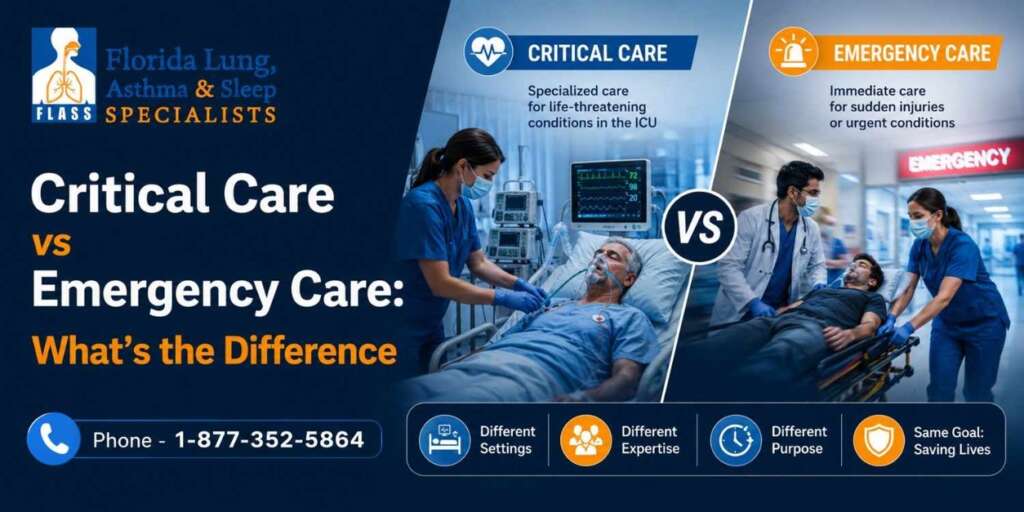
Emergency care is the first place where a patient is taken when there is a sudden health problem. Think of it as the “first help zone” of a hospital.
The emergency department (ER) handles sudden and unexpected problems like accidents, chest pain, stroke, or serious infections. The main aim here is quick care and keeping the patient stable.
In a normal ER setting, doctors and nurses quickly:
- Check the patient’s condition
- Give immediate life-saving treatment
- Do fast tests like blood tests or scans
- Decide if the patient can go home or needs ICU care
If you hear the term “ICU vs ER,” this is where the main difference begins. The ER focuses on fast action and not long treatment.
What Happens in Critical Care?
Critical care starts when a patient is in a very serious condition and needs constant watch and support. This usually happens in the Intensive Care Unit (ICU).
Here, patients are already made stable from the emergency room but still need close care all the time. Machines may help with breathing, heart rate, and other body functions.
Unlike the ER, critical care is not rushed in the same way. It is more steady, detailed, and focused on recovery over time.
Patients in ICU are often handled by experienced critical care experts who deal with very serious health problems like organ failure, major injuries, or severe infections.
Emergency Medicine vs Critical Care: How They Connect
To understand emergency medicine vs critical care, think of it as a step-by-step process instead of two separate systems.
The ER is the starting point. The ICU is the next step when the condition is still very serious.
For example, a person with a serious accident injury may first be taken to emergency care where doctors stop bleeding and make the patient stable. After that, they may be moved to ICU for longer care and recovery.
In simple words:
- Emergency medicine saves life in the first moment
- Critical care supports life after that
Sometimes both teams work together because patient needs overlap.
A Closer Look: ER vs ICU Comparison
Here is a simple comparison to help you understand ICU vs ER clearly:
|
Feature |
Emergency Room (ER) |
Intensive Care Unit (ICU) |
|
Purpose |
Fast help and first care |
Long-term care and close watch |
|
Time Frame |
Minutes to hours |
Days to weeks or more |
|
Patient Condition |
Sudden emergency cases |
Very serious or recovering patients |
|
Monitoring |
Short and quick checks |
Constant and detailed checks |
|
Staff Focus |
Fast decisions |
Ongoing care and recovery support |
This is where the idea of critical care vs emergency medicine becomes easier to understand in real hospital work. Both are important, but they do different jobs.
The Role of an Emergency Care Assistant
Behind every emergency response, there is a support team. One important role is the emergency care assistant.
These workers help doctors and nurses by:
- Helping move and position patients
- Preparing emergency tools and equipment
- Checking basic patient signs
- Supporting first help steps
They are often the first support a patient gets in a busy emergency situation. While doctors take key decisions, emergency care assistants help keep things running smoothly.
Where Do ICU and ER Overlap?
Even though ER and ICU are different, they are closely linked. Many patients move directly from one to the other.
Common cases include:
- Serious accident injuries
- Heart attacks or strokes
- Breathing failure
- Serious infections or sepsis
In a medical emergency in Florida, for example, the process is the same as anywhere else: ER first, ICU next if needed. The place may change, but the treatment steps stay the same.
This teamwork between departments helps save lives in critical moments.
Decision Making: When Does a Patient Go Where?
You may wonder how doctors decide if a patient stays in ER or goes to ICU.
It depends on how stable the patient is.
- If the problem can be controlled quickly, the patient stays in ER and may go home
- If the condition is still very serious, the patient is moved to ICU
This decision is often made very fast based on vital signs, test results, and doctor judgment.
Why Understanding This Difference Matters
Knowing the difference between emergency care and critical care is not just medical knowledge. It can help you stay calm and respond better during emergencies.
You will understand:
- ER is for sudden danger
- ICU is for serious and ongoing care
- Both work together for patient survival
It also helps families understand what is happening when their loved one is in hospital care.
How Modern Healthcare Is Changing
Today’s hospitals are improving both emergency and critical care systems. New tools, faster tests, and better training are helping save more lives.
Hospitals are now designed so patients can move smoothly from ER to ICU when needed. Digital monitors, quick response teams, and trained staff help reduce delays.
This makes emergency medicine vs critical care less about comparison and more about teamwork. Both departments work together for the same goal: saving lives and helping recovery.
Wrapping Up:
At FLASS, we actively provide care when it matters most. Our team is trained to handle both emergency care and critical care, ensuring patients receive immediate attention in urgent situations and continuous, close monitoring during serious conditions.
From rapid response in emergencies to advanced ICU support, we focus on delivering timely, skilled, and compassionate treatment at every step. We understand how critical every second is, and our services are built around that responsibility.
If you need trusted care and expert medical support, connect with FLASS today and let us be there when it matters most.
FAQs
- What is the main difference between emergency care and critical care?
Emergency care handles sudden health problems and gives quick treatment. Critical care supports serious patients with constant monitoring and longer treatment in ICU.
- When should someone go to the emergency room?
A person should go to the emergency room during sudden injuries, chest pain, breathing trouble, stroke signs, or any life-threatening health emergency.
- What happens after a patient is moved from ER to ICU?
After ER stabilization, patients go to ICU for close monitoring, advanced support, and ongoing treatment until their condition becomes stable and improves.
- Who works in critical care units?
Critical care units are managed by trained doctors, nurses, and specialists who handle serious patients needing constant care, monitoring, and life support systems.
- Is emergency care faster than critical care?
Yes, emergency care is fast and focuses on immediate action, while critical care is slower, steady, and focuses on recovery and continuous patient support.