
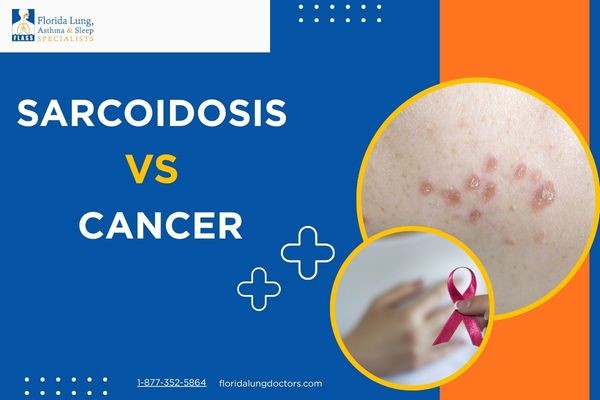
When people first hear about sarcoidosis, one of the most common fears is whether it is linked to cancer. The confusion is understandable because both conditions can affect organs, create lumps, and even look similar in medical scans. This often leads to questions like is sarcoidosis cancer or can sarcoidosis turn to cancer? This blog will explain everything in detail so you can understand the differences without extra stress.
What Makes Sarcoidosis Different from Cancer?
Sarcoidosis is a condition caused by inflammation. It makes small clusters of immune cells, called granulomas, form in different parts of the body. These are not tumors. They are the body’s immune system reacting.
Cancer, on the other hand, is the uncontrolled growth of abnormal cells. These cells can damage nearby tissues and spread to other parts of the body, which is called metastasis.
Here is an easy way to think about sarcoidosis vs cancer:
- Sarcoidosis is an immune system overreaction
- Cancer is abnormal cell growth that can be harmful
- Sarcoidosis may get better on its own or stay the same
- Cancer usually gets worse without treatment
Even though they are different, they can sometimes look alike in imaging tests, especially when sarcoidosis affects organs like the lungs or lymph nodes.
Why Are Sarcoidosis and Cancer Often Confused?
The confusion often comes from similar signs in medical tests. For example:
- Enlarged lymph nodes
- Lung problems
- Mass-like areas in scans
This is why doctors sometimes need biopsies to confirm what is going on. A granuloma from sarcoidosis can look like a tumor at first glance. Terms like sarcoidosis and lung cancer often appear together because both conditions commonly affect the lungs.
Can Sarcoidosis Turn to Cancer?
This is one of the most searched questions: Can sarcoidosis turn to cancer?
The simple answer is no. Sarcoidosis does not turn into cancer. It is not a condition that leads to cancer.
However, there are a few points worth knowing:
- Some studies suggest a slightly higher chance of certain cancers in people with long-lasting sarcoidosis
- Long-term inflammation in the body can sometimes increase cancer risk a little
- Sometimes cancer is mistaken for sarcoidosis at first, or the other way around
So while sarcoidosis does not become cancer, keeping track of your health is important, especially if the condition lasts a long time.
Is Sarcoidosis Cancer?
Let us be clear: Is sarcoidosis cancer? No, it is not.
Sarcoidosis is an inflammatory disease, not a cancerous one. It does not spread quickly or destroy tissues like cancer. That said, it can still affect daily life depending on which organs are involved.
Key Differences You Should Know
Knowing the differences between sarcoidosis vs cancer can help reduce worry and make better choices.
|
Feature |
Sarcoidosis |
Cancer |
| Nature | Inflammatory, non-cancerous | Malignant, uncontrolled growth |
| Progression | Often stabilizes or resolves | Can spread aggressively |
| Primary Organs | Lungs, lymph nodes, skin, eyes | Varies depending on type |
| Imaging Findings | Granulomas, symmetrical nodules | Masses, irregular nodules, invasion |
| Treatment | Anti-inflammatory medications, monitoring | Surgery, chemotherapy, radiation, immunotherapy |
| Risk of Malignancy | Slightly higher but not direct transformation | Intrinsic malignancy |
This chart highlights that while sarcoidosis and cancer may appear similar in some ways, their behavior, treatment, and prognosis are very different.
Risk Factors and Overlap
While the two conditions are different, there are situations where they overlap:
- Chronic inflammation in sarcoidosis may slightly increase cancer risk over time
- Some cancers can trigger sarcoid-like reactions in the body
- Misdiagnosis can delay the right treatment
It is important to get checked early. Even if someone notices general health issues or searches about sarcoidosis symptoms, seeing a doctor is always the next step.
When Should You Be Concerned?
If you or someone you know has sarcoidosis, there is no need to immediately worry about cancer. However, you should be alert in the following situations:
- Symptoms change suddenly or get worse
- Unexpected weight loss
- Continuous fatigue or pain increases
- Scans show unusual changes
These signs do not mean cancer for sure but do need further medical checks.
Sarcoidosis vs Cancer
The topic of sarcoidosis vs cancer often causes unnecessary fear. Sarcoidosis is not cancer, and it does not turn into cancer. Still, regular check-ups are important to watch for any problems or overlap with other conditions.
Understanding this difference helps patients feel more in control and less anxious.
In Closing:
At FLASS (Florida Lung, Asthma & Sleep Specialists), we do more than treat sarcoidosis, we partner with you in your health journey. Our approach starts with understanding your unique condition, lifestyle, and concerns. We combine advanced diagnostic tools, personalized treatment plans, and regular follow-ups to manage inflammation and protect vital organs. We make sure every patient feels informed, supported, and empowered to make health decisions confidently.
If you want a treatment plan tailored to you and guidance every step of the way, connect with FLASS today.
FAQs
-
Can sarcoidosis turn into cancer?
No, sarcoidosis does not become cancer. It is an inflammatory condition. Regular check-ups are important to monitor health, but sarcoidosis itself does not turn into cancer.
-
Is sarcoidosis cancer?
No, sarcoidosis is not cancer. It is caused by inflammation in the body. Unlike cancer, it does not spread aggressively or destroy tissues in the same way.
-
What is the difference between sarcoidosis and cancer?
Sarcoidosis is caused by inflammation, while cancer is abnormal cell growth. Sarcoidosis may improve or stay stable, but cancer usually gets worse without treatment.
-
Can sarcoidosis affect the lungs like lung cancer?
Yes, sarcoidosis can affect the lungs, which may look similar to lung cancer on scans. Proper tests are needed to tell them apart.
-
How do doctors check if it is sarcoidosis or cancer?
Doctors use scans and sometimes biopsies to check. Granulomas from sarcoidosis can look like tumors, so tests help confirm the correct condition.